John Adams: A Story of Struggle
One of the greatest stories of those Indians living on the Siletz Reservation in Oregon is that of John Adams (1847-1928), who was born near present-day Ashland, in what was then "Indian Territory," only invaded by a very few hardy non-indian settlers, at the time of his birth. His parents are believed to be Te-cum-tom (Limpy Tyee), of the Rogue nation, and Usuwi, of the Shasta nation. Adams, in his later years, stated that he could not speak his father's language, but spoke the language of his mother's tribe.
Adams was the first Indian to become a Methodist minister at the Siletz Agency on the Central Oregon Coast.
He was a Rogue River Shasta, who had been orphaned in the early 1850s during a battle between the Indians of Southern Oregon and Northern California and the miners and soldiers who were invading the country.
He was left in the forest with his grandmother after his parents were killed and later was adopted by an uncle. In 1924, he shared this spontaneous narrative with ethnologist Edward S. Curtis, who wrote that Adams' narrative would not be remembered for its "historical value"
...but for its intimate view of the inexorable hardships of native life in wartime and of the difficulties attending "reconstruction" of the individual, the following spontaneous narrative of a Rogue River Shasta is given. John Adams paced thoughtfully about the green terrace at Siletz Reservation, and without solicitation began to speak these thoughts.
Pretty tough times! Awful hard time when I'm baby. Rogue River Injun War that time. Well, soldier come, everybody scatter, run for hills. One family this way, one family other way. Some fighting. My father killed, my mother killed. Well, my uncle he come, my grandmother. Old woman, face like white woman, so old. "Well, my poor mother, you old, not run. Soldiers coming close, we have to run fast. I not help it. I sorry. Must leave you here. Maybe soldiers nit find you, we coming back. Now this little baby, this my brother's baby. Two children I got myself. I sorry, I not help it. We leave this poor baby, too." That's what my uncle say.
Course, I small, maybe two years, maybe three years. I not know what he say. Somebody tell me afterwards. Well, old grandmother cries, say: "I old, I not afraid die. Go ahead, get away from soldiers."
Well, just like dream. I 'member old grandmother pack me around in basket on her back. All time she cry and holler. I say, "Grandmother, what you do?"
"I crying, my child."
"What is it, crying, Grandmother?"
"I sorry for you, my child. Why I cry. I not sorry myself. I old. You young, maybe somebody find you all right, you live."
Then I sleep long time. When I wake up, winter gone, springtime come. I 'member plenty flowers, everything smell good. Old grandmother sitting down, can walk no more. Maybe rheumatism. She point long stick, say, "Pick that one, grandson."
I weak, can't walk. S'pose no eat long time. I crawl on ground where she point. "This one, Grandmother?"
"No, that other one."
"This one?"
"No, No! That one no good. That other one."
By-me-by I get right one, she say, "Pull up, bring him here."
I crawl back, she eat part, give me part. Don't like it, me. Too sour. Well, she show me everything to eat, I crawl ground, get roots. Pretty soon can walk. Old Grandmother never walk. Just sit same place all time. One day she point big tree. "You go see. If hole in bottom, inside you find nice, sweet ball hanging up. That's good."
Well, I find hole, crawl inside. White stuff there, sweet, good. I like that. Every day go to that tree.
Grandmother say, "S'pose you hear something say 'Pow! Pow!' That's man. You holler, he come help us." But I can't holler, too small, just make squawk. She make new basket, tell me: "Put upside down out there, maybe somebody find it."
One day hear something: "Pow! Pow!" She's too old for holler, me, I'm too small. Maybe I'm scared too. Well, I crawl inside tree and eat sugar. Pretty soon hear somebody talk. Then I'm 'fraid, hide in tree. Somebody coming! I lay down on ground, hide close. "Where are you? Where are you?" Well, there's my uncle. He pick me up one hand. I 'member hanging over his arm while he go back my grandmother.
"Well," that man say, "soldiers not stay long that time. Pretty soon come back, can't find you. Think some grizzly bear eat you. Look for bones, can't find bones. All winter I cry. Then I say my wife: "Maybe better go other side today. Maybe find something other side." That's how I find that new basket. Then I look close. Little grass been moved. Pretty near can't see it. Some kind little foot been there! That how I find my old mother."
Pretty soon soldiers come again. That's the time they leave my Old Grandmother 'cause she can't walk. Maybe she die right there, maybe soldiers kill her. She cry plenty when my uncle take me away. Well, all time going 'round in the woods. After while my uncle get killed. Then I'm 'one. Klamath Injun find me, bring me to new reservation.
Two my relations, they're married to Rogue River man. They take me, but pretty soon both dead. One Rogue River man say, "Well, you're small. You can't do nothing. I keep you. Long as you like to stay, you stay with me." I can’t talk his language, my mother's Shasta Injun. So we talk jargon. Few years after that, then he die. Then some woman hear about me, say she's my sister. Well, I don't know. I look at her. Don't know her. She take me in steamboat from Port Orford from Portland. It's like the ground falling under me, one side, other side. Can't eat, sick all time. Well, we go to Portland, I'm glad. Eat lots. Then we stay Dayton good many years, come Siletz. I'm young fellow now.
There is no record of Adams' arrival at the Siletz Agency, but he told Curtis he was a "young fellow" when he arrived at the reservation. According to Curtis, Adams lived with a Galice Creek at the reservation's Upper Farm until he was able to take care of himself.
Life was hard those days. The Indians were hungry and angry at being brought to the strange land and the agents, seldom the best of men, left much to be desired.
From the beginning the problem of governing the many tribes had been a constant concern. The agents commissioned to serve the Siletz Agency complained of the difficult of managing the hundreds of Indians who had little in common except their presence on the Coast Reservation.
This used to be soldiers' house. Some holes there, where posts used to be. I was prisoner once. Soldier gave me wedge and ax, split spruce blocks. Wedge go in, block won't crack. Too green. Soldier say, "Go ahead, split more block."
I say, "Got no wedge."
He say, "Twice I tell you go ahead, split more block. You no split more—I fix you!"
Well, what I going to do? No wedge for split more block, soldier he going fix me. Don't I want get shot. Ball so heavy I can't drag him, have to pack him on my shoulder. Well, I carry that ball, go up to soldier. I lift my ax, say, "Go ahead, fix me!" He try back away, I follow him, keep close so can't use his gun. Then somebody run between us. Another soldier say, "What's a matter you fellow, what's a matter?"
"Well, I got no wedge for split more block." This man say, "You no split more, I fix you." Don't I want get shot. "He fix me, I fix him plenty." That's what I say.
Each tribe, often each band within a major tribe, had its own language, making an interpreter necessary. When a council was called, interpreters were needed not only for the agent, but often for conversations among Indian tribes.
Adams related the tale of a Coast Indian who tried to stone him because his people "make that Rogue River War."
All this Coast Injun say: "That fellow bad blood. His people make that Rogue River War. They start it. He's bad fellow." They keep talking that way, looking at me. Sometimes throw rocks. One day they start again, maybe twenty. I tired all that talking, get mad. I tired all that talking, get mad. When they throw rocks, I throw too. That's the time lose these front teeth. Got no teeth since then. Rock knock 'em out. When that rock hit me, I get crazy. I start for my house for get gun. They head me off. Can't run fast, feels like my head coming off. All throwing rocks. One fellow's got knife. Says, "We get him!" I grab fence rail, hit him on the neck. He drop, squirm like fish in canoe. Next one come, hit him on head. He drop too. Don't squirm. That rail too heavy, throw him away and run again. Can't get to my house, they head me off. What I going do? Well, I get in fence corner. What I going fight with?
Some white man on other side say, "Here, Johnny, some rocks." Push some rocks under fence. I say, "Well, you come over help me."
"No, I 'fraid. Here's more rocks."
I pick up rocks. Four men get close now. He's got knife, too. Thump! Hit him in ribs. Stagger like drunk. Next man, thump! Hit him in ribs. He go back. Others all stop. Then I jump fence, run home, get my gun. They go back. That's rough times!"
The difficulty of governing the agency was recognized in 1871 by Oregon Superintendent of Indian Affairs, A. B. Meacham when he announced the assignment of the Siletz Agency to the Methodist Episcopal Church to "guarantee that the Siletz Indians will have every opportunity and encouragement to throw off some of the bad habits acquired by contact with vicious white men." (In the 1870s the religious organizations assumed responsibility for nomination of "moral men" to serve as agents.)
Many immediate changes were made in the Siletz Indians' daily lives under the supervision of the church.
Gen. Joel Palmer, agent from January 1871 to December 1872, abolished the buck and gag and the whipping post and seldom used the guardhouse. Palmer was one of the few non-indian men respected by the Indians, having won their confidence in treaty sessions and transportation of the tribes to the reserve. It was during his term as agent that Christianity was introduced to the Indians.
http://ftp.wi.net/~census/lesson41.html
**********************************************************
John Adams was my maternal great grandfather. A Rogue River
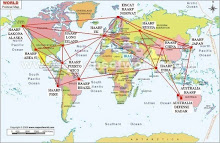
Shasta and Applegate Shasta Indian. He was brainwashed by religious fanatics, (a survival mechanism for Indigenous peoples of that time) Methodists, and tried to keep the peace in a time of turmoil, especially during the time of the great "GHOST DANCE." My great grandmother was Upper Klamath River Karuk, from Southern Oregon and Northern California tribal peoples. My great great grandma was affectionately called Klamath Annie but "they" say there are no Shasta Indians left, I beg to differ, although and unfortunately almost completely assimilated into the white mans world of greed, power and control. You see, all this went down during the great "Gold Rush Era" they wanted our land, resources, timber and our souls...but "some" wouldn't let them have it. We were charged with starting the "Rogue River Indian Wars" and I wouldn't have it any other way even if John Adams became a Methodist Minister. Shit happens. By the way I assume you realize by now how he got his Christian name, as all Indians of that time were not allowed to speak their native tongue or practice their sacred rituals and eventually assimilated into the white mans schools and religious ways. HOW SAD! This area: the Rogue River valley, Marble Mountains, Medicine Creek and Mt. Shasta areas are sacred ground, they follow ley lines and are the center of a powerful vortex. ....the land of little people and YETI, of beauty which words cannot begin to describe. It is a sacred place full of energy unseen and unfelt by most people. Women, were the medicine people, shamans and leaders, not men and there are sacred "sitting areas" engraved in rock for fasting and vision quests, that few know about. We all know of the magic of Mt. Shasta, but what you don't know is how intense the area around that mountain is also....all is sacred. Power is all around us and in certain areas even more so....waiting for us to ask, accept and receive it when necessary. Notice the symbol of the ley lines and the formation it creates....the connection is there.
Peace
TaraHUM CHI!